Oh My God. I Just Felt Bad for an Alligator.
Oct 20, 2026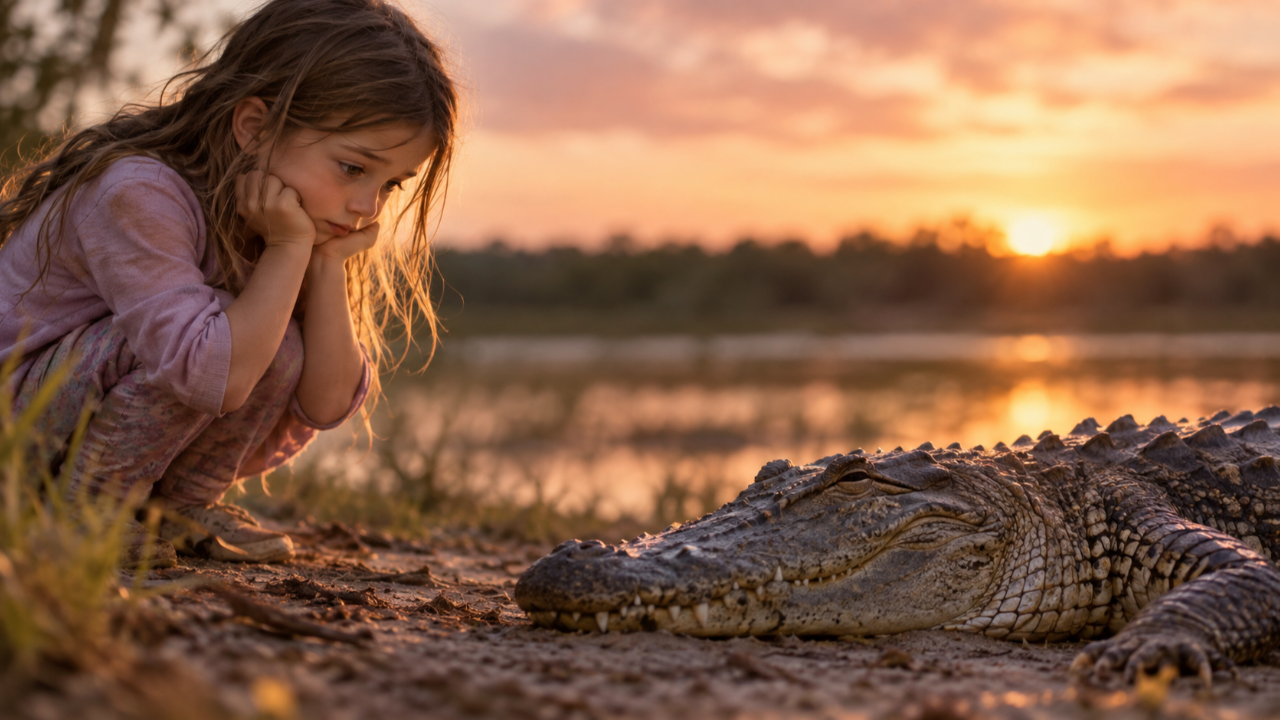
I was hanging out with my seven-year-old niece over the weekend when I learned something very important about her.
She hates snakes. And alligators.
Not mildly dislikes them. Hates them. They’re gross. They’re scary. Yuck. Who would even like those things?
I happened to have some pictures on my phone that were perfect for testing the limits of this hatred.
First, I showed her a baby rattlesnake I had come across while hiking.
“Ew!”
Definitely still hated snakes.
Then I showed her a picture from when I lived in Florida. There was an alligator sitting near the edge of a lake. More disgust. More commentary about how awful alligators are.
Then I remembered another picture.
One day I had been out walking and came across something I had never seen before. There was a dead alligator on the side of the path.
I told her about it.
“Let me see.”
So I found the picture and handed her my phone. She looked at it.
And then she said something I wasn’t expecting.
“Aw.”
There was a pause. Then her eyes got wide.
“Oh my God! I just felt bad for an alligator!”
She seemed genuinely shocked by herself. This creature she had spent the last several minutes telling me was disgusting and terrifying had somehow made her feel sad.
She ran over to tell her mom.
“Mom! Guess what? I just felt bad for an alligator!”
I laughed. But I also found myself thinking about that moment long after it happened.
Something Had Shifted
The alligator hadn’t changed.
Her fear of alligators probably hadn’t changed either. I’m pretty sure she had no interest in meeting one anytime soon.
But for a second, the thing she had been calling scary and gross became something else. It became a living thing that had died.
And before her mind could remind her that she hated alligators, something softer came through.
“Aw.”
I think there’s something deeply human about that little moment.
We create images of things that scare us. Sometimes we have to.
Our minds are constantly trying to figure out what is safe and what isn’t. What belongs close to us and what needs to stay far away.
Dangerous. Bad. Scary. Selfish. Mean. Crazy. Monster.
Those words can help us organize our experience, especially when we’ve been hurt.
But sometimes the image becomes so complete that we stop seeing anything behind it.
Funtopia
Watching my niece reminded me of something I used to do with my daughter Jordan when she was younger.
Jordan sometimes had nightmares, and instead of trying to convince her that the thing she was afraid of wasn’t scary, we created an imaginary place together called Funtopia.
Funtopia was exactly what you might imagine a child would design if given complete creative control over a world.
There was candy everywhere. Different lands. Different places to play. And, most importantly, ways to deal with the villains who showed up in her nightmares.
One of them was a zombie.
The zombie would come running toward her. He was terrifying. His eyes looked like they had blood coming out of them.
So Jordan had ways to protect herself. She could trap him in cotton candy or freeze him with some other candy contraption we had invented.
The important thing was that she was safe first. The zombie couldn’t get her.
And then, once he was safely stuck there, we could get curious.
Why was he running toward her? What did he want?
As we started talking to him, we discovered something.
The zombie wasn’t running toward people because he wanted to hurt them. He was lonely. He didn’t know how to make friends.
Whenever he saw someone, he would get so excited about the possibility of having a friend that he would run toward them.
Which, unfortunately, is not a particularly effective way for a zombie to make friends.
Everyone would scream and run away.
And the blood coming from his eyes?
It wasn’t actually blood. His eyes were red and irritated because he had been crying so much.
He was sad.
He just wanted someone to stay.
I don’t remember every detail of the story we created that night. But I remember what happened to the villain.
He became someone.
Jordan could still keep him trapped in cotton candy. She didn’t have to let him chase her. She didn’t have to pretend he wasn’t frightening.
But now there was something behind the frightening image.
There was a story. There was loneliness. There was a need. There was something she could recognize.
Enemy Images
I didn’t have language for it at the time, but I think we were playing with something I now think about a lot.
Enemy images.
The versions of people we create when we are hurt, frightened, angry, or trying to protect ourselves.
The person isn’t just someone who did something hurtful. They become selfish. They become toxic. They become the problem. They become the villain.
And once someone becomes the villain, curiosity starts to disappear.
I know this feeling in myself.
When I’m hurt or angry with someone, I can feel my picture of them getting smaller. I stop wondering what might be happening inside them. I become very certain about their intentions.
Of course they said that because they don’t care.
Of course they did that because they’re selfish.
Of course they should know better.
There can be a strange comfort in that certainty. It gives my hurt somewhere to go.
And sometimes I need that protection for a while.
Because curiosity is hard when my nervous system still feels like it is under attack.
Safety Before Curiosity
Maybe that’s part of what Funtopia accidentally got right.
We didn’t ask Jordan to understand the zombie while he was still chasing her.
We froze him first.
Safety came before curiosity.
I keep coming back to that.
Because seeing someone’s humanity doesn’t mean giving them access to us. Understanding why someone behaves the way they do doesn’t make the behavior okay. Compassion doesn’t require us to abandon boundaries.
Sometimes the zombie needs to stay in the cotton candy.
Sometimes the alligator is dangerous.
But danger and humanity aren’t always opposites.
Someone can hurt me and still be hurting. Someone can behave terribly and still be trying, however clumsily or destructively, to meet some very human need.
Someone can be a person I need distance from and still be a person.
That can be difficult to hold.
It’s much easier when the world separates cleanly into heroes and villains. But most of us know, somewhere inside ourselves, that we don’t fit cleanly into those categories either.
We have hurt people. We have reacted from fear. We have said things we wish we could take back.
We have chased people when what we really wanted was for them to stay.
And we have probably had moments when someone saw only our behavior and missed everything happening underneath it.
When the Monster Becomes Someone
Maybe that’s why my niece’s reaction stayed with me.
Nobody asked her to have compassion for the alligator. Nobody explained why she should.
She simply saw something she hadn’t seen a moment before.
And her heart responded before her story about alligators could catch up.
“Aw.”
Then came the shock.
“Oh my God! I just felt bad for an alligator.”
I wonder how many people in my life I’ve turned into alligators.
People I’ve reduced to the thing they did. The thing they said. The way they hurt me. The political belief I can’t understand. The behavior I find impossible to accept.
Maybe the question isn’t whether I should forgive them.
Maybe it isn’t whether I should trust them, reconcile with them, or invite them back into my life.
Those are different questions.
Maybe the first question is much smaller.
Can I become curious about the living being underneath the image I’ve created?
Not to excuse them. Not to fix them. Not even necessarily to get closer.
Just to see if there is still a person there.
And maybe to notice what happens inside me when I do.
My niece still hates alligators. I suspect that hasn’t changed.
But for one brief moment, something got through the fear and disgust.
She saw past the alligator.
And compassion showed up.
Sometimes I wonder if connection begins that simply.
Not with agreement. Not with forgiveness. Not even with understanding.
Just with the moment when the monster becomes someone.
________________________________________________________________________
Want to take this deeper?
In our “Ask Me Anything” series, we’ll explore how to take ideas like these out of your head and actually practice them in your body and relationships. Bring your questions about this article, your own life, or anything else you want to explore with us. You can also send questions ahead of time to [email protected] so we can include them in our discussions.
Join us: https://www.connectiondocs.com/ask-the-connection-docs